
The Donald Trump administration’s actions since the beginning of 2025 to increase pressure and sanctions on the Islamic Republic with the aim of “halting” Iran’s oil exports have been largely unsuccessful, although this policy has sharply raised the costs for Tehran of evading sanctions.
The Trump administration had promised to reduce Iran’s oil exports to 100,000 barrels per day. However, data from the energy intelligence firm Kpler, obtained by Iran International, show that the volume of Iranian oil cargoes unloaded at Chinese ports in 2025 has declined by only 8 percent compared with the previous year.
Last year, an average of 1.36 million barrels per day of Iranian crude oil and condensates have reached Chinese refineries.
That said, in 2024 the Islamic Republic was exporting around 56,000 barrels per day of oil to Syria, a flow that stopped after the fall of Bashar al-Assad’s government.
Overall, it can be said that the Trump administration’s policy of engineering a sharp collapse in Iran’s oil exports has failed.
Crude oil and gas condensates account for nearly 40 percent of Iran’s total exports, with a normal value—without factoring in the costs of sanctions evasion—estimated at about $33 billion last year, equivalent to nearly 10 percent of Iran’s gross domestic product.
Iran’s Double Loss
Trump’s failure to fulfill his pledge to halt Iran’s oil exports does not amount to a victory for the Islamic Republic.
Before the previous Trump administration’s sanctions in 2018, Iran was exporting 2.5 million barrels of oil per day, a figure that plunged to around 400,000 barrels per day in 2020.
With the advent of the Joe Biden administration, Iran’s oil exports increased year by year, reaching about 1.55 million barrels per day in 2024.
With the start of the new Trump administration, not only did the recovery in Iran’s oil exports stop, it went into decline and reversed.
Another key point is the rising cost of evading sanctions. At the beginning of 2025, the Islamic Republic was offering Chinese refineries discounts of $2 to $3 per barrel. According to Kpler estimates, that figure has now risen to $11.
Kpler’s data also show that the volume of Iran’s floating oil storage has more than doubled over the past year, reaching about 152 million barrels.
Under normal conditions, the daily cost of chartering tankers to store such a volume of oil at sea is around $8 million. Leasing vessels from the so-called “shadow fleet,” which is used to smuggle oil from Iran, Russia, and Venezuela, costs several times more.
Even the tanker-tracking firm Vortexa estimates Iran’s floating oil at as much as 200 million barrels.
Put simply, around $5 to $6 billion of Iran’s oil revenue is spent annually on keeping oil at sea and near Chinese waters so that deliveries to Chinese refineries can continue in the event of loading disruptions.
So far, about 15 percent of the value of Iran’s oil is lost through discounts to Chinese refineries and 20 percent through floating storage costs—but this is only part of the erosion of Iran’s oil revenues.
A large share of Iranian oil must pass through ship-to-ship transfers, document changes, and rebranding before reaching Chinese customers—a process handled by oil brokers.
Another portion of Iran’s oil revenue goes to these intermediaries, document forgers, extensive networks of shell companies, and similar channels.
Nor do the Islamic Republic’s problems in accessing oil revenues end there. Part of Iran’s oil income is settled through barter for Chinese goods, and another portion in exchange for Chinese services.
The Wall Street Journal reported in October 2025 that $8.4 billion of Iran’s annual oil export revenue from China is settled through barter for Chinese services.
But 2026 will be an even more difficult year for the Islamic Republic.
According to tanker-tracking data, the United States sanctioned only 38 percent of tankers involved in evading Iran’s oil sanctions in 2024; in 2025, that figure has exceeded 70 percent.
The U.S. seizure of several sanctioned tankers off the coast of Venezuela—vessels that were also carrying oil for Iran—will create new challenges for the Islamic Republic.
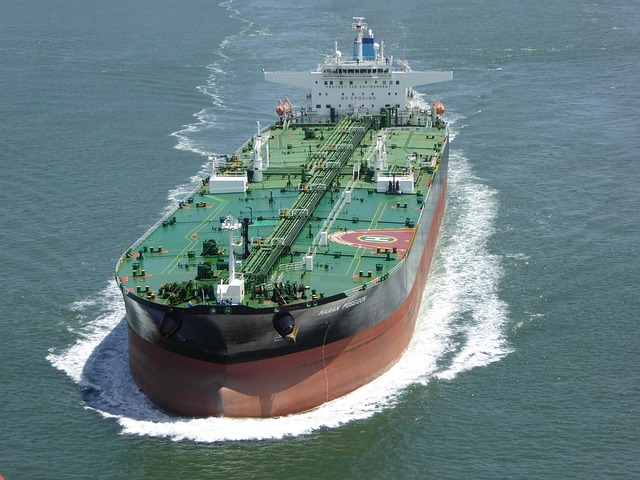
According to estimates by TankerTrackers, a tanker-tracking firm, about 1,470 shadow-fleet tankers were active in 2025, with 40 percent serving Iran’s oil exports. A roughly similar share was attributed to Russia, with the remainder mainly serving Venezuela and two other countries.
As a result, at least from a logistical standpoint, smuggling sanctioned oil will be far more difficult for the Islamic Republic in 2026.
The original article was published by Iran International Persian Desk