
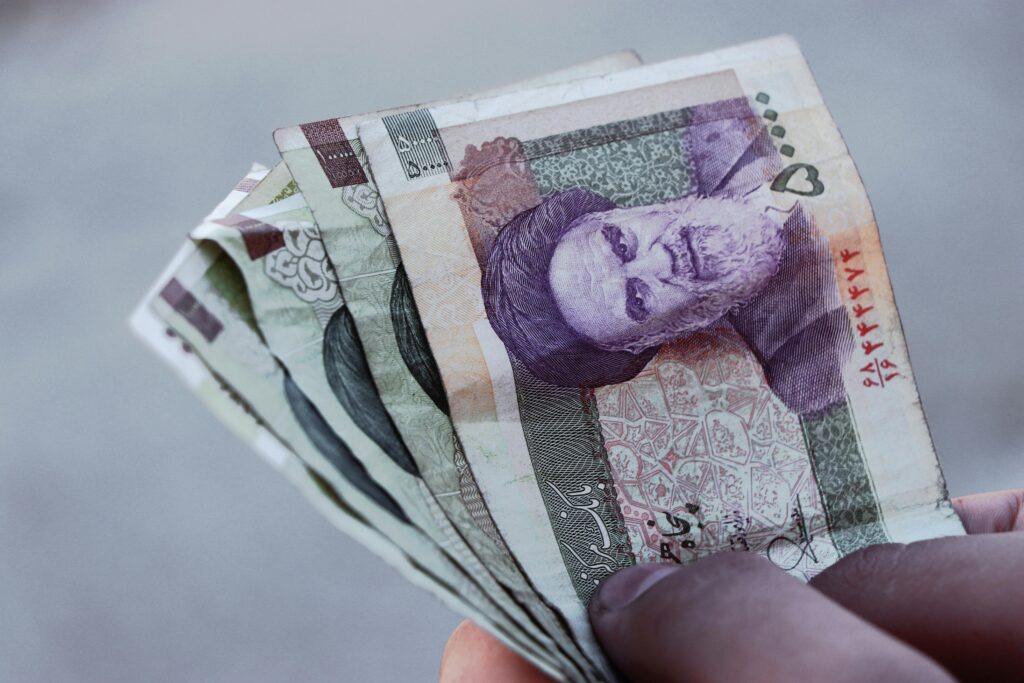
The Iranian rial has resumed falling at an increasingly rapid pace in recent days, with new record lows set almost daily. The Iranian currency has lost 20 percent of its value in just one month, with the U.S. dollar now trading at around 1.32 million. During this same period, the official data and domestic media field investigations indicate that the food prices have risen by 12 to 25 percent; the price of raw milk, meanwhile, has surged 52 percent in only thirty days, an alarming trend that affects food security, especially for children. Overall, the prices of rice, bread, milk, eggs, and chicken are double what they were in the summer.
According to Food and Agricultural Organization statistics, dairy consumption in Iran fell by roughly one-third between 2010 and 2024. Iranian media now report that worsening poverty and soaring inflation are pushing dairy and meat products off the tables of a large portion of the population.
Worsening poverty and soaring inflation are pushing dairy and meat products off the tables of a large portion of the population.
The deputy governor of Iran’s Central Bank, without addressing the causes behind surging food prices, says these goods are imported using a fixed government exchange rate, an effective subsidy and that the depreciation of the rial should not affect prices.
Iran currently operates with four different exchange rates: A preferential rate for food and pharmaceuticals of 285,000 rials per U.S. dollar; a currency exchange center rate used among exporters, importers, and banks of 720,000 rials per dollar; an official government used for budget accounting of 660,000 rials per dollar, and an open-market rate used for most actual imports of 1.32 million rials per dollar.
The Central Bank official insists that Iran imports essential goods and pharmaceuticals at the preferential rate, which has remained unchanged since last year. Central Bank data also show that the regime allocated $8.5 billion in preferential currency for imports of essential goods and pharmaceuticals during the first ten months of this year—only $1 billion less than the same period last year—suggesting that food and medicine prices should not have increased dramatically. Yet, even based on official figures, food prices have risen by an average of 55 to 165 percent over the past year, and the prices of several medicines have doubled in recent weeks.
The explanation lies in state-run systematic corruption: the government itself is the main importer of essential goods. For example, the state purchases Pakistani rice at less than $1 per kilogram. At the preferential rate, this equals 285,000 rials. The very same government then distributes this rice domestically at 1.7 million rials—six times the import cost. This means that there is no subsidy for rice, an important part of the Iranian diet. Thus, the government exploits the preferential exchange rate not to stabilize prices, but to extract massive profit. A similar pattern exists across other essential imported goods. If private importers could use the open-market rate of 1.26 million rials per dollar, retail prices would still be lower than what consumers currently pay for state-imported goods.
Central Bank figures show that in the first ten months of 2025, Iranian importers received $40 billion in various currencies, of which $8.6 billion was preferential-rate foreign exchange. Crucially, the Central Bank omits that the total amount of foreign currency provided to importers is 20 percent lower than during the same period last year.
Moreover, instead of supplying dollars and euros, the government has increasingly provided importers with yuan, rubles, Indian rupees, Turkish lira, and Arab regional currencies. Customs data show a 16 percent drop in total imports.
Another factor is that one-quarter of Iranian imports now occur through barter with exporters, which the Central Bank misleadingly counts as “foreign exchange allocation for imports.” This burdens importers with additional conversion or barter costs—raising final prices and opening the door to corruption and rent-seeking.
The government exploits the preferential exchange rate not to stabilize prices, but to extract massive profit.
Iran’s oil revenues have also declined sharply. Global oil prices have fallen in recent months, and tanker-tracking data from Kpler show that Iranian oil deliveries to Chinese ports have dropped by 20 percent, to 1.2 million barrels per day, while discounts offered by Iran have widened from $3 to $10 per barrel. Oil and gas condensate exports account for 40 percent of Iran’s total exports, meaning these declines significantly reduce national revenue.
In addition, Iran faces a mounting stockpile of unsold oil at sea. Daily charter rates for Iran’s so-called “ghost fleet” tankers have reached roughly $200,000 per vessel.
Data from Vortexa indicate that Iran’s floating oil inventory has doubled in recent months, reaching 200 million barrels—requiring around 100 supertankers, at a cost of $20 million per day just to store unsold oil in Asian waters.
To compensate for this revenue shortfall, the government turns to consumers—selling imported goods at multiple times their cost to finance the budget deficit. Meanwhile, reports indicate that hundreds of millions of dollars have been funneled in recent months to revive Hezbollah in Lebanon and other proxy groups. This not only darkens prospects for a nuclear deal and dramatically reduces hopes of sanctions relief but also intensifies Iran’s currency crisis. The Iranian consumer continues to pay the price.
The article was originally published on Middle East Forum