
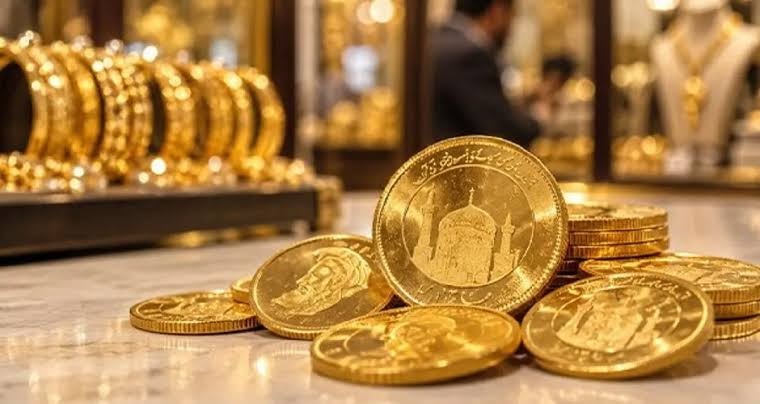
For years, Iranians have turned to gold to protect their savings from the relentless depreciation of the rial. Now, as war and soaring living costs deepen the economic crisis, some are selling those holdings to pay for everyday necessities.
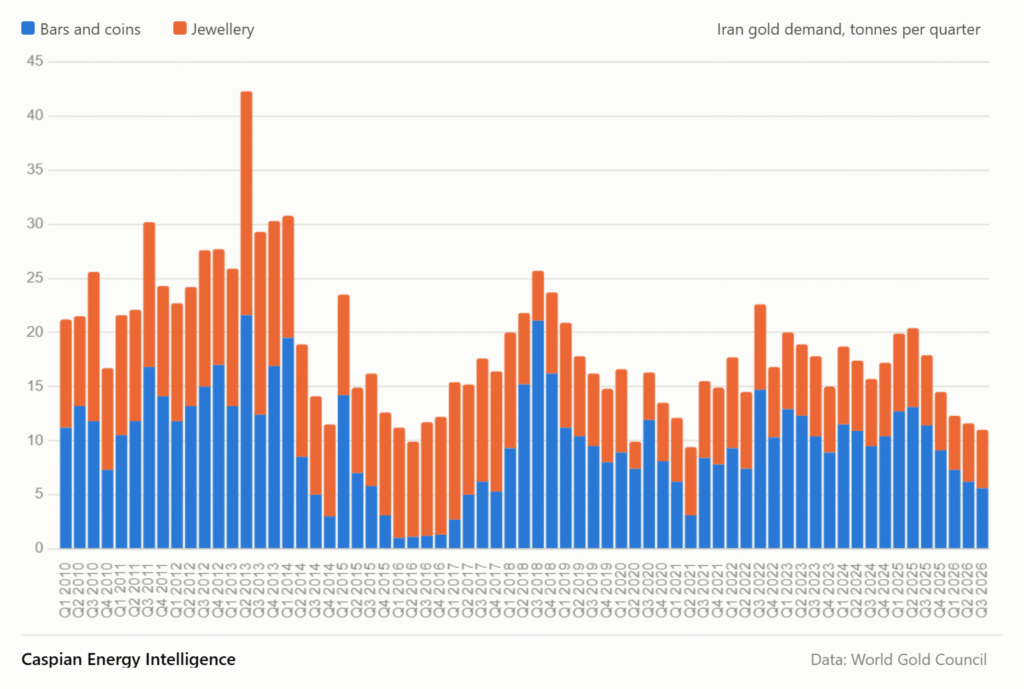
The World Gold Council (WGC) said demand for gold bars and coins in Iran fell by more than half to 5.6 tonnes in the third quarter of 2026 compared with a year earlier.
“The war continued to disrupt daily life, and prompted some selling of bars and coins to cover living and relocation costs,” the report said.
Overall, Iranian demand for gold bars and coins reached 19.1 tonnes in the first nine months of 2026, down from 36.2 tonnes in the same period last year, a decline of approximately 47%.
“Iranian demand declined 17% to 5.4 tonnes as the ongoing war strained consumer sentiment and disrupted daily life,” the WGC said, referring to gold jewellery.
Jewellery purchases totalled 15.8 tonnes in the first nine months of 2026, compared with 21 tonnes in the same period last year.
An economy under strain
The decline comes amid a sharp depreciation of Iran’s national currency and soaring gold prices. The rial has lost approximately 60% of its value against the US dollar over the past year.
Meanwhile, the price of the Bahar Azadi gold coin has surged by 141% over the past 12 months, putting new purchases increasingly beyond the reach of many households.
Years of US sanctions have restricted Iran’s oil exports, access to international banking and foreign investment, depriving the economy of revenue and putting sustained pressure on the rial.
Decades of economic mismanagement, widespread corruption and inefficient state-dominated industries have compounded the damage, fuelling inflation and undermining living standards.
Official data from Iran’s Statistical Center show that food inflation surged to nearly 123% last month, while prices for water, electricity and fuel almost doubled compared with October 2025.
The deteriorating economic situation has also been accompanied by job losses and a slowdown in business activity.
Wages fall behind living costs
Seyed Malek Hosseini, deputy minister for entrepreneurship development and employment at the Ministry of Cooperatives, Labour and Social Welfare, recently said around 500,000 jobs had been lost last year.
He added that a further 1.2 million to 1.4 million jobs had been lost following the latest war, which began on February 28. Hosseini put the country’s current employed population at 23.5 million.
The financial pressure on Iranian households is also evident in the widening gap between wages and the cost of living.
Reuters recently reported that official estimates put the minimum monthly cost of living for a three-person working-class family at around $336, more than three times the average monthly wage of approximately $92 at the free-market exchange rate.
“As wages fail to keep pace with inflation, many families have exhausted savings, cut consumption or borrowed money to cover daily expenses,” Reuters reported.
For some Iranian households, gold is no longer simply a safeguard against the rial’s collapse. It has become a way to pay for everyday necessities.
The original article, written by Dalga Khatinoglu, was published on Iran International