
OPEC report: Iran’s output fell 41% from last year’s level, yet the other members’ combined output has risen above the pre-war level
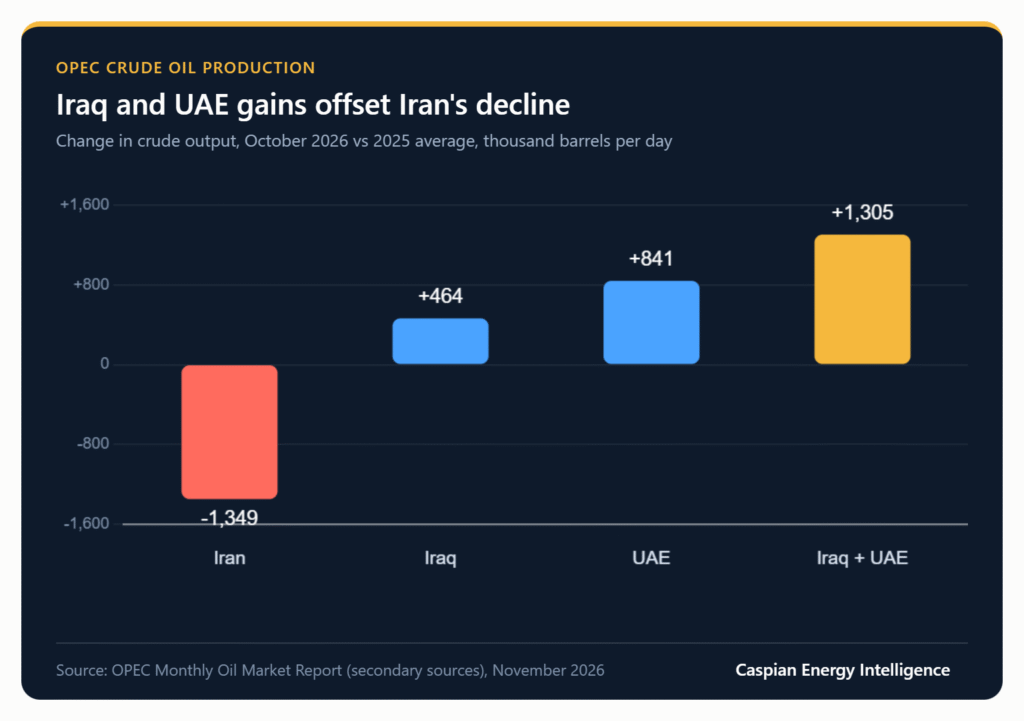
According to the new OPEC monthly report, Iran’s daily oil output fell from 3.262 million barrels last year to 1.914 million barrels in October, a drop of 1.348 million barrels per day.
Over the same period, Iraq and the UAE together raised their output by about as much as Iran lost.
OPEC figures show that the daily output of Iran’s fellow members rose from 24.363 million barrels last year to 25.250 million barrels in October.
This came after the Islamic Republic, in the early months of the war, blocked the Strait of Hormuz and attacked oil facilities and tankers of the region’s Arab countries, severely affecting their oil production. But when the US naval blockade against Iran began in mid-July, the regional production trend reversed: Iran’s output plunged, while the other OPEC members were able to increase theirs.
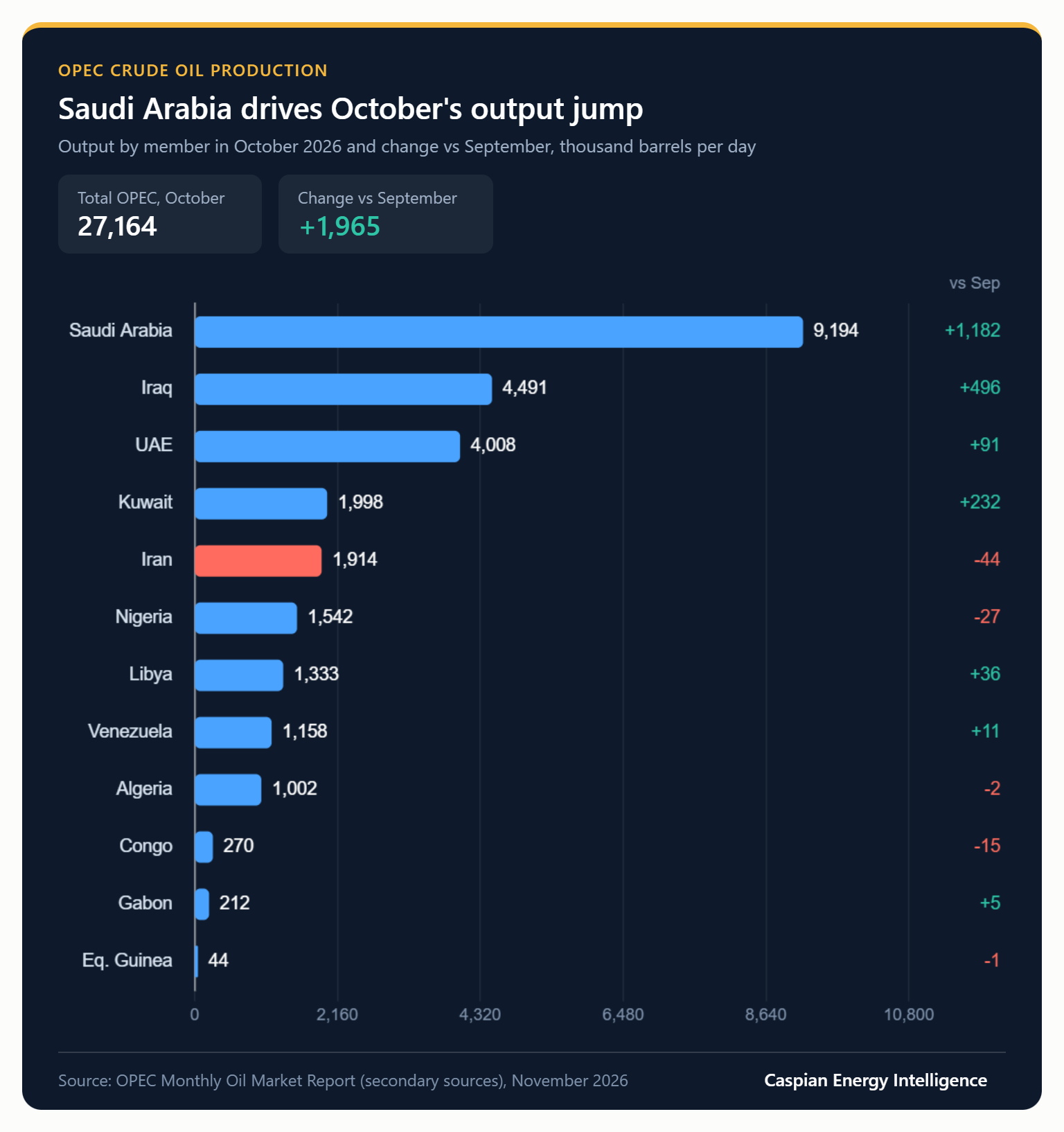
OPEC data show that in October, despite a 44,000-barrel drop in Iran’s output compared with September, the total daily output of the organization’s members rose by nearly 2 million barrels, reaching a peak of 27.164 million barrels. About 60 percent of this increase came from Saudi Arabia, and the rest was mainly supplied by increased output from Iraq, Kuwait and the UAE.
Notably, last month the UAE produced 841,000 barrels per day and Iraq 464,000 barrels per day more than the pre-war level. Together, these two countries’ increase amounts to more than 1.3 million barrels per day, a figure roughly equal to Iran’s entire output loss.
According to OPEC’s estimate, Iraq produced 4.5 million barrels per day last month. Iraq’s oil minister recently announced that this month the country’s daily output has exceeded 5 million barrels.
The UAE also produced over 4 million barrels per day last month and still has spare production capacity. Since the start of May, following a dispute over production quotas, the country has left OPEC so that it can raise its output without the organization’s quota restrictions. Its output is nevertheless still included in OPEC’s monthly statistics.
The original report was published on VOA Persian