
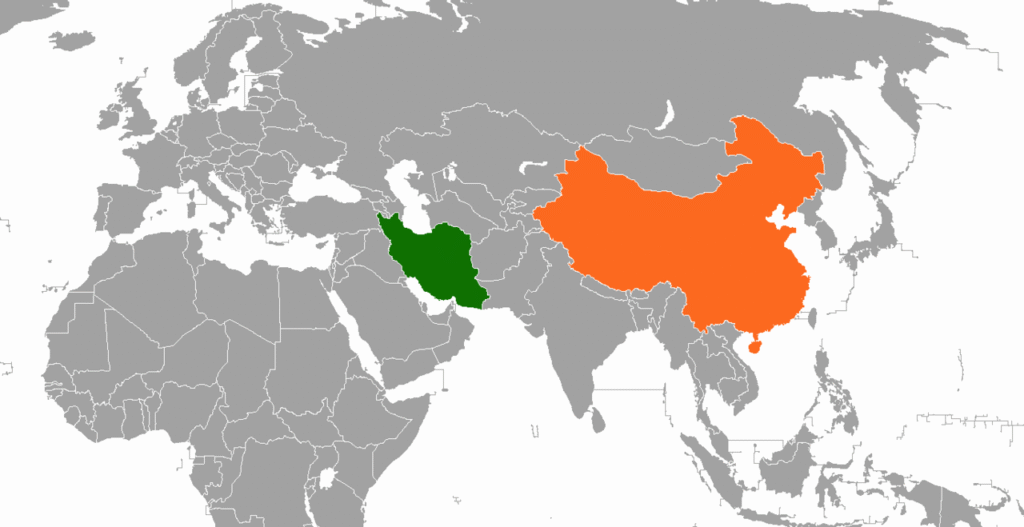
China’s latest customs data show that oil exports from Arab Gulf countries to China almost recovered to year-earlier levels in October, despite the suspension of Iranian oil sales to the country. Saudi Arabia and Qatar have even surpassed their export levels from October last year.
But one figure in the Chinese customs data stands out: an 84% plunge in crude oil imports from Malaysia.
Over the past several years, numerous reports have documented how Iranian crude has been rebranded and shipped to China as Malaysian oil to circumvent international sanctions. Energy intelligence firm Kpler has also previously confirmed that a substantial portion of China’s reported imports from Malaysia actually consisted of Iranian crude.
According to Kpler data, seen by Iran International, China received an average of 1.153 million barrels per day (bpd) of Iranian oil in October last year, most of which was delivered to Chinese refineries under the Malaysian origin label.
Iran reportedly offered discounts of around $10–11 per barrel to facilitate the rebranding and sale of its crude.
Chinese customs data also show that the country imported an average of 1.113 million bpd of oil declared as Malaysian in October last year. This figure plunged to just 182,000 bpd in October this year, an 84% decline.
China’s average oil imports from Malaysia during the first ten months of this year also fell by 53%, a decline broadly comparable to the reduction in Iranian oil sales to China over the same period.
The sharp contraction in imports declared as Malaysian crude, alongside the suspension of Iranian oil shipments, raises questions about the extent to which Malaysia had been serving as a transit and rebranding hub for Iranian oil entering the Chinese market.
China-Iran Trade in Decline
Chinese customs data also show that non-oil trade between China and Iran has steadily deteriorated since the United States imposed its naval blockade, falling to around half its August level last month and just a quarter of its pre-war level.
Iran exported only $26.5 million worth of non-oil goods to China in October, while importing $197 million in Chinese products.
The figures highlight the broader impact of the disruption on bilateral economic ties, extending well beyond Iran’s oil exports.
China’s Oil Imports from Arab Countries Recover
China’s customs data show that its combined crude oil imports from Arab countries in the region reached 4.28 million bpd in October, just 2% below the level recorded in the same month last year.
Saudi Arabia and Qatar both exported more oil to China last month than in October 2025, while Iraqi crude exports to the Chinese market have also fully recovered.
China also increased its oil imports from Russia by 10% last month, bringing them to an average of 2.396 million bpd.
Russia, Saudi Arabia and Iraq were China’s three largest oil suppliers in October.
Nevertheless, China’s total crude oil imports stood at 9.75 million bpd last month, down 13.4% from October last year.
In recent months, China has opted to reduce purchases of relatively expensive crude and meet part of its refineries’ requirements from strategic oil reserves, amid disruptions to supplies and elevated market prices.
China-Arab Trade Rebounds
Meanwhile, overall trade between China and Arab countries in the region has recovered considerably after plunging to less than half during first months of war.
In October, bilateral trade had not only recovered but exceeded the level recorded in the same month last year by 17%, reaching $32.2 billion.
However, cumulative trade during the first ten months of this year stood at approximately $225 billion, still 20% below the corresponding period last year.
The recovery in October suggests that commercial ties between China and Arab economies have proved more resilient than initially expected, despite the disruption to regional energy exports and shipping routes.
Source: VOA Persian, Caspian Energy Intelligence