
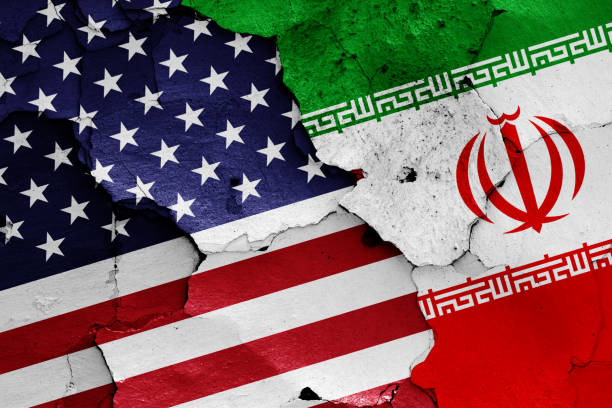
The United States has signaled it will issue a one-month waiver allowing limited sales of sanctioned Iranian oil, aiming to calm global markets amid heightened geopolitical tensions. While the move may offer Tehran short-term relief, it ultimately reinforces Washington’s control over Iran’s oil revenues and exports.
U.S. Treasury Secretary Scott Bessent described the measure as a “narrowly tailored, short-term authorization” to release Iranian oil currently stranded at sea—estimated at around 140 million barrels. However, he emphasized that Iran would face “difficulty accessing any revenue generated,” underscoring that the waiver is designed to manage flows, not ease financial pressure.
According to data from Kpler, Iran has accumulated roughly 200 million barrels of oil stored in tankers at sea, with about two-thirds effectively stranded. Under normal conditions, shipments to China—the primary buyer of Iranian crude—take about three weeks. But sanctions evasion tactics, including ship-to-ship transfers, have stretched delivery times to as long as 60–70 days.
Given that Iran typically offloads around 1.5 million barrels per day at Chinese ports, it usually maintains 60–70 million barrels in floating storage. Since early last year, however, rising geopolitical tensions and the risk of conflict have driven that figure sharply higher.
Loading rates have also outpaced discharge. At one point last month, Iran’s crude loading surged to 2.17 million barrels per day—nearly double the volume offloaded in China. Even amid ongoing conflict, tanker-tracking data suggests Iran’s exports have averaged around 1.46 million barrels per day in March, still exceeding recent discharge levels.
This imbalance explains the growing stockpile—and explains why Washington appears reluctant to disrupt Iranian loading operations outright, which could trigger volatility in global oil markets.
Beyond crude, Iran exports roughly 800,000 barrels per day of refined products, particularly liquefied petroleum gas and fuel oil. Combined, Iran’s oil and product exports account for about 2 percent of global daily consumption—significant enough to influence market stability.
While Washington insists that Iran’s access to revenues will remain restricted, Tehran has long relied on barter arrangements, particularly with China. Similar mechanisms could extend to other Asian buyers, including India and Pakistan.
As a result, it may be unrealistic to expect that oil revenues under the waiver can be blocked. At most, the U.S. could steer how those revenues are used—potentially limiting them to humanitarian or agricultural imports, echoing earlier sanctions models such as Iraq’s oil-for-food framework during Saddam Hussein’s regime.
Iran imports around $17 billion worth of agricultural goods annually, including grains, tea, and edible oils, alongside roughly $1 billion in meat imports. The estimated value of 140 million barrels of floating oil—around $14 billion at current prices—could, in theory, cover a substantial portion of these essential imports.
The waiver also fits into a broader U.S. strategy of calibrated pressure. By allowing limited oil flows, Washington reduces the risk of price spikes while maintaining leverage over Iran’s financial system. At the same time, the policy may serve a de-escalatory purpose. Tehran has framed the current conflict as existential and has demonstrated a willingness to retaliate against energy infrastructure in the region when its own facilities are targeted. This raises the stakes for global energy security, particularly in the Persian Gulf.
By keeping a narrow economic lifeline open—such as continued oil exports—Washington may be attempting to prevent further escalation while preserving incentives for restraint within Iran’s political system.
Another, less visible dimension of the waiver may be its signaling effect toward factions within Iran’s political establishment. By allowing limited oil exports to continue, Washington could be seeking to reinforce the perception that a pathway—however narrow—remains open for the system’s survival if its external behavior shifts.
In this sense, the policy may be designed not only to manage markets and deter escalation, but also to shape internal calculations in Tehran. It suggests that a recalibration of foreign policy—particularly a de-escalation with the West and Israel—could preserve core state structures while easing economic pressure.
That said, any meaningful policy change from within the Islamic Republic remains unlikely. The system’s ideological foundations and power structure constrain such shifts, limiting the prospects for a durable strategic realignment.
The original article was published on Middle East Forum