
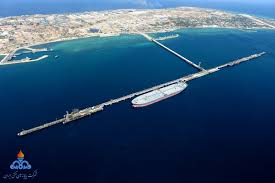
Despite decades of sanctions, military threats, and strategic warnings, nearly all of Iran’s oil exports still flow through a single island—and one of the world’s most volatile maritime chokepoints. As regional tensions escalate, this dependency has become one of the Islamic Republic’s most dangerous structural liabilities.
Supreme Leader Ali Khamenei has warned that any future conflict will be regional. Naval drills are under way in the Strait of Hormuz. U.S. forces, led by the USS Abraham Lincoln, remain within striking range of Iranian territory.
Behind the rhetoric lies a stark reality: Iran’s economic survival depends on uninterrupted access to the Persian Gulf. Any disruption could cripple state revenues within days.
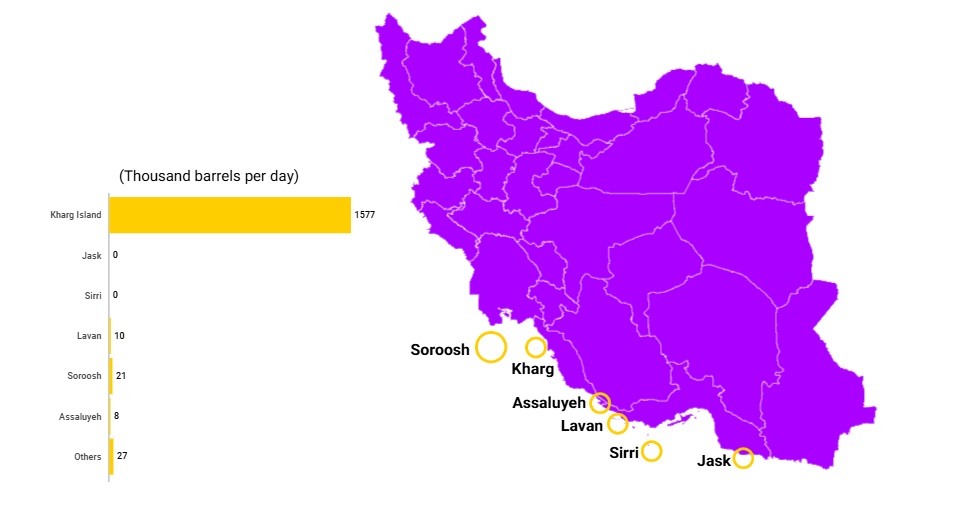
IOD’s analysis of 2025 shipping data reveals the depth of this exposure. Roughly 95% of Iran’s crude oil exports were loaded from Kharg Island, a coral outcrop just 35 km off the Bushehr coast. The island handles five times more oil than all other Iranian export terminals combined. Any potential Air strike, blockade, or mining operation could all but shut down Iran’s oil economy overnight.
This external risk now coincides with unprecedented violence at home. In January, Iranian security forces killed thousands of protesters in just 48 hours, making it the bloodiest domestic crackdown of the 21st century. The repression triggered fresh U.S. warnings and accelerated regional escalation. Iran now faces mounting pressure on two fronts, while its economic artery remains critically exposed.
A Fragile Architecture
Despite years of official promises, Iran has failed to establish a viable alternative to the Strait of Hormuz. The much-touted Jask terminal on the Sea of Oman remains incomplete. As of early 2026, nearly all oil and gas production—along with 96% of crude exports—must still pass through the strait, the world’s most precarious energy corridor.
Iran’s energy infrastructure is tightly concentrated along the northern Persian Gulf:
- Bushehr province produces about 70% of Iran’s natural gas (185 bn cubic metres annually),
- Hosts the world’s largest gas condensate refinery (390,000 barrels per day),
- And accounts for nearly half of the country’s petrochemical output.
Offshore, the South Pars gas field supplies over 90% of condensates and 40% of national reserves.
Iran’s major oil refineries—Abadan, Lavan, and Bandar Abbas—sit adjacent to Kharg Island and South Pars, forming a narrow and highly exposed industrial belt.
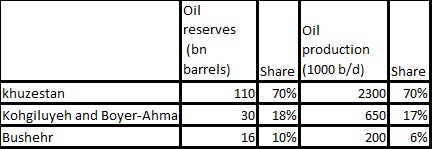
Production is similarly clustered inland. Khuzestan alone produces 70% of Iran’s crude, with most of the rest coming from Kohgiluyeh, Bushehr, and Hormozgan. The result is a brittle network where one sustained air campaign could disable extraction, refining, and export operations in a single stroke.
The Strait’s Double Bind
Roughly 20 million barrels of oil pass through the Strait of Hormuz each day—about one-fifth of global supply. Yet only 6% flows west. Around 84% heads to Asia, with China importing 5 million barrels daily, followed by India.
Crucially, Saudi Arabia and the UAE have built bypass routes—via the Red Sea and the port of Fujairah. Iran has not.
Tehran often threatens to close Hormuz in the event of war. But it has more to lose than any of its rivals. Hormuz is not just a pressure point—it is Iran’s financial bloodstream. Blocking it would disrupt global markets. But it would devastate Iran first.
Almost everything Iran sells to the world still passes through one island, one refinery corridor, and one narrow stretch of sea.
In any regional war, the first casualty may not be global energy flows—but the economic viability of the Iranian regime itself.
The original article was published on Iran Open Data website.