
Dalga Khatinoglu
The six Turkic-speaking countries imported more than 16,300 megawatts of solar power generation equipment (wafers, cells and panels) from China in the 12 months to October 2026. Azerbaijan recorded the fastest growth, with imports increasing by 710% compared with its cumulative imports through October 2025.
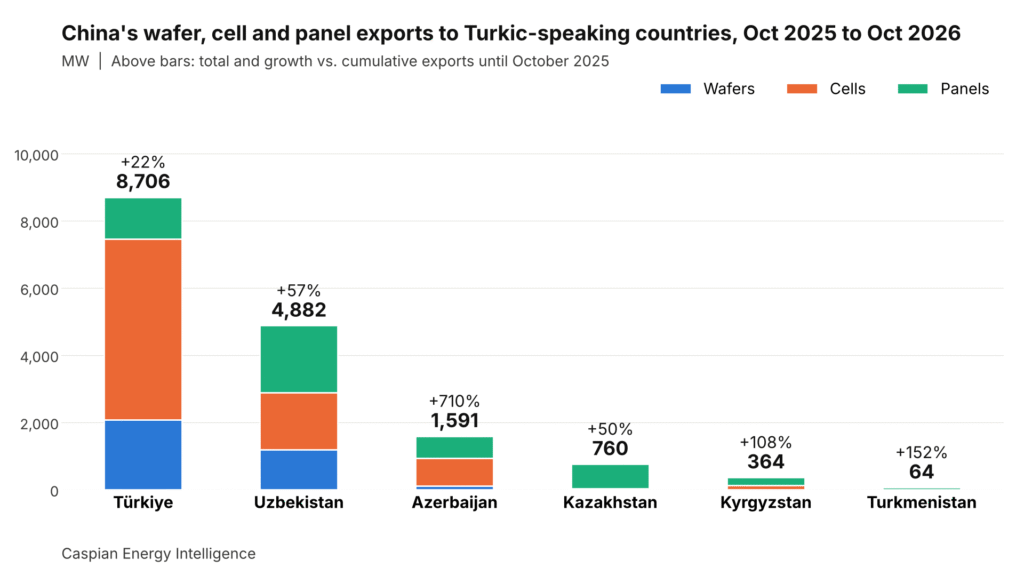
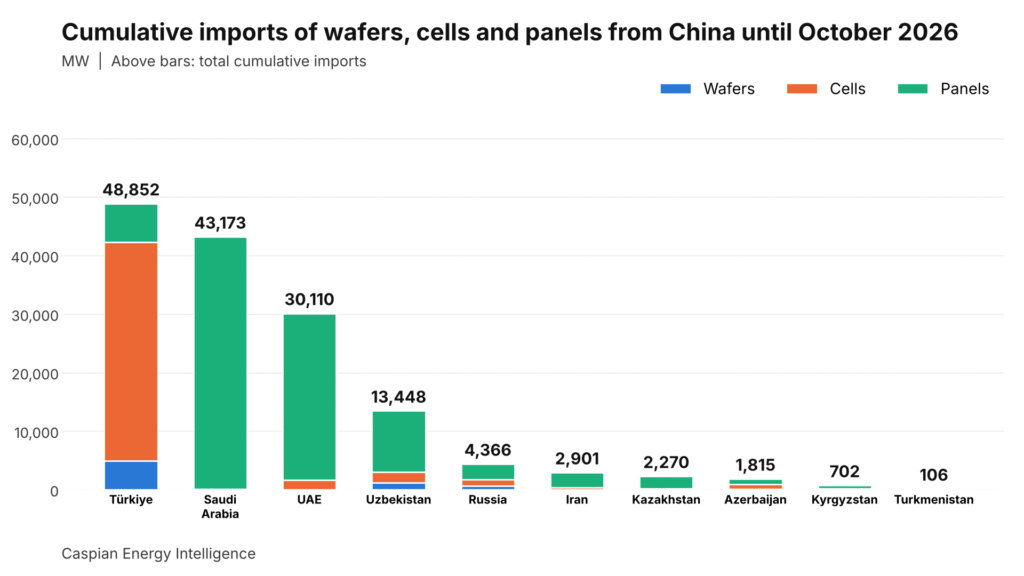
Figures from energy think tank Ember show that China’s combined exports of solar wafers, cells and panels to Türkiye, Uzbekistan, Azerbaijan, Kazakhstan, Kyrgyzstan and Turkmenistan reached approximately 16,367 MW between October 2025 and October 2026. The six countries’ cumulative imports rose from around 50,800 MW through October 2025 to approximately 67,200 MW through October 2026, an increase of about 32% in one year.
Türkiye and Uzbekistan: The Two Largest Buyers
Türkiye was the largest buyer, importing 8,706 MW, up 22%, and accounting for more than half of China’s total exports to the group. Türkiye’s import structure is different from that of its regional counterparts: approximately 62% consisted of cells, 24% of wafers and only 14% of panels.
Uzbekistan ranked second, with imports of 4,882 MW, up 57%. Panels accounted for 41% of its imports, followed by cells at 35% and wafers at 24%.
Azerbaijan Records the Sharpest Increase
Azerbaijan’s cumulative imports rose from approximately 224 MW through October 2025 to around 1,815 MW through October 2026, more than an eightfold increase. About 1,591 MW of this total was imported during the 12-month period.
More than half of the imports consisted of cells (823 MW), while panels accounted for 41% (649 MW). Azerbaijan also imported 119 MW of wafers, whereas it had previously imported no wafers from China.
Smaller Markets
Kazakhstan imported 760 MW, an increase of 50%, with panels accounting for 96% of the total. Kyrgyzstan purchased 364 MW, up 108%, while Turkmenistan imported 64 MW, an increase of 152%. Turkmenistan’s high growth rate reflects its very low starting base of just 42 MW.
Saudi Arabia and the UAE: A Different Scale
The scale of these purchases becomes clearer when compared with Gulf countries. During the same 12-month period, Saudi Arabia imported 9,579 MW of solar equipment from China, up 29% compared with its cumulative imports through October 2025. Almost all of it consisted of panels.
The UAE imported 6,621 MW, an increase of 28%, with panels accounting for 94% of the total. Combined imports by the two Gulf countries reached approximately 16,200 MW, almost matching the total imports of all six Turkic-speaking countries.
Iran: Almost Absent from the Market Amid Severe Electricity Shortages
Iran imported just 212 MW of solar equipment from China during the same 12-month period, almost entirely consisting of panels. This was approximately 45 times less than Saudi Arabia’s imports, 31 times less than the UAE’s and about 7.5 times less than Azerbaijan’s. Iran also purchased less than Kyrgyzstan, which imported 364 MW.
This comes as Iran urgently needs investment in electricity generation. The country faces a severe natural gas shortage and is unable to secure sufficient fuel for its thermal power plants even during winter, when electricity demand is significantly lower than at the summer peak.
Since most of Iran’s electricity is generated by gas-fired power plants, gas shortages directly translate into electricity shortages. In recent days, the government has resumed daily power cuts for households, while the state-owned power utility Tavanir has warned that blackouts will intensify as temperatures fall. Some of the pressure is being shifted onto household consumers, as industries and production facilities also require a stable electricity supply.
According to the International Renewable Energy Agency (IRENA), Iran had installed only 1,700 MW of solar power capacity by the end of last year. Iran’s energy minister had previously pledged to increase the country’s solar power capacity to 12,000 MW this year, a target that stands in stark contrast to the country’s imports of just 212 MW of solar equipment over the past 12 months.
Sources: China Customs data; Ember Energy, International Renewable Energy Agency (IRENA); calculations by Caspian Energy Intelligence. Growth rates are calculated against cumulative exports through October 2025.