
Iran has started reducing oil output as onshore storage tanks approach capacity following a month-long US naval blockade that has nearly halted exports, according to data from Kpler and Bloomberg. More than 70 percent of the country’s onshore tanks are now filled.
An Iran Open Data analysis of Kpler shipping data, Bloomberg reporting, and OPEC production statistics finds that Iran faces its first forced production cut of the sanctions era, with consequences that extend beyond lost revenue to the long-term recoverability of its largest western oil fields.
The US naval blockade against the Islamic Republic took effect roughly a month ago, and exports have nearly stopped. Iran’s nominal onshore storage capacity is about 95 million barrels, and at current inflow rates the tanks are expected to fill within weeks.
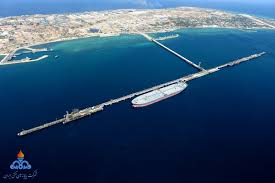
Bloomberg reported that storage facilities on Kharg Island, Iran’s largest oil terminal and home to 42 percent of national storage capacity, are nearly full. Production began declining about two weeks ago.
Kpler data show that as of May 13, more than 82 percent of Kharg’s storage was filled.
Production already falling
OPEC estimated Iran’s combined crude and condensate output last year at about 4 million barrels per day, with exports of roughly 2 million barrels per day of oil, condensates, and petroleum products. Domestic consumption absorbed the rest.
OPEC data show daily crude oil production fell to 2.854 million barrels in April, 350,000 barrels below pre-war levels.
During the previous round of intensified sanctions under the first Trump administration, Iran’s daily oil and product exports dropped to 690,000 barrels in 2020 but never stopped entirely. If the current blockade holds, crude production will have to fall below 1.7 million barrels per day and condensate output below 500,000 barrels per day — roughly matching domestic consumption alone.
Western fields at risk
Over the past two decades, Iran brought major heavy-oil fields online in the west of the country, including Yadavaran and Azadegan, with more than 50 billion barrels of oil in place. Recovery factors at these fields are only 7 to 10 percent, and Iranian refineries are not equipped to process the heavy crude.
Shutting in wells at these fields carries technical risks: pressure decline, reduced flow rates, and a lower recovery factor on restart. Under normal operation, only 7 to 10 percent of the reserves are recoverable. A forced shutdown could push tens of billions of barrels beyond economic reach.
Iran also produces about 750,000 barrels per day of gas condensates from its gas fields, while domestic consumption capacity is below 500,000 barrels per day. Without an export or storage outlet for the surplus, Iran may have to shut in some gas wells, even as the country faces a severe gas shortage.
The original article was published in Iran Open Data