
Author: Dalga Khatinoglu/
The Islamic Republic of Iran’s disruption of oil tanker traffic through the Strait of Hormuz has not only triggered a surge in oil prices and reduced China’s crude oil imports, but has also severely affected Beijing’s non-oil trade with Arab Gulf countries.
China is the largest trading partner of the member states of the Gulf Cooperation Council (GCC), as well as Iran’s largest trading partner. Bilateral trade between China and the Arab Gulf states reached approximately $340 billion last year, underscoring the high degree of dependence of both regional economies and China on the security of maritime routes through the Gulf.
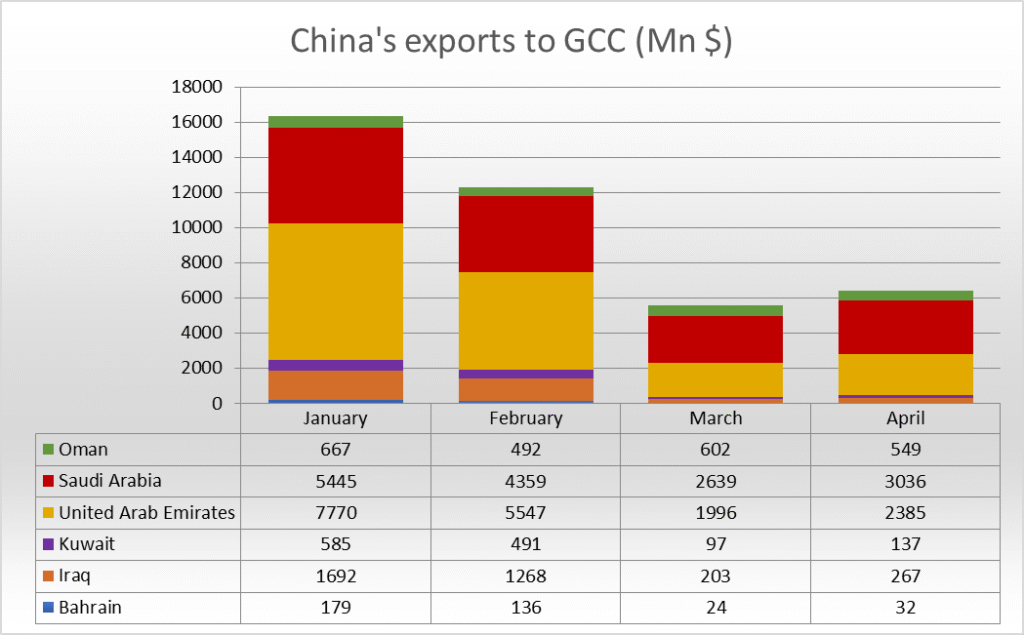
Chinese customs data now show that since disruptions began in the Strait of Hormuz on March 1, trade between China and the Gulf Arab countries has been significantly affected, and the damage extends far beyond declining crude oil imports.
Source: Caspian Energy Intelligence, China Customs
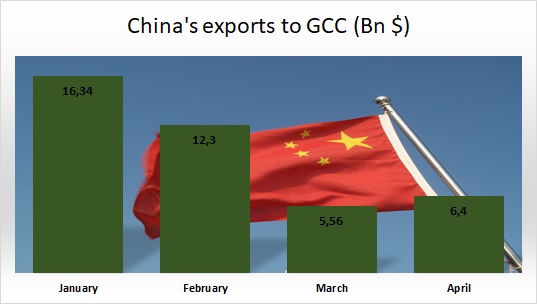
Detailed customs figures indicate that China’s exports to GCC countries have nearly halved during this period. This suggests that the Strait of Hormuz crisis has disrupted not only energy flows but also China’s trade chain in goods, industrial equipment, and consumer products across the region.
Meanwhile, global oil prices have risen by roughly 40% since early March, placing considerable pressure on Chinese refiners—particularly the independent “teapot” refineries. These refineries account for around 30% of China’s refining capacity, but due to narrow profit margins and government pricing policies, much of their profitability depends on access to discounted, sanctioned crude from Iran and Russia.
Research by S&P Global Platts indicates that many of these refineries are now operating at only around half of their capacity.
At the same time, China’s crude oil imports have declined by roughly 20% over the past two months, and Beijing has also reduced purchases of oil from Iran and Russia.
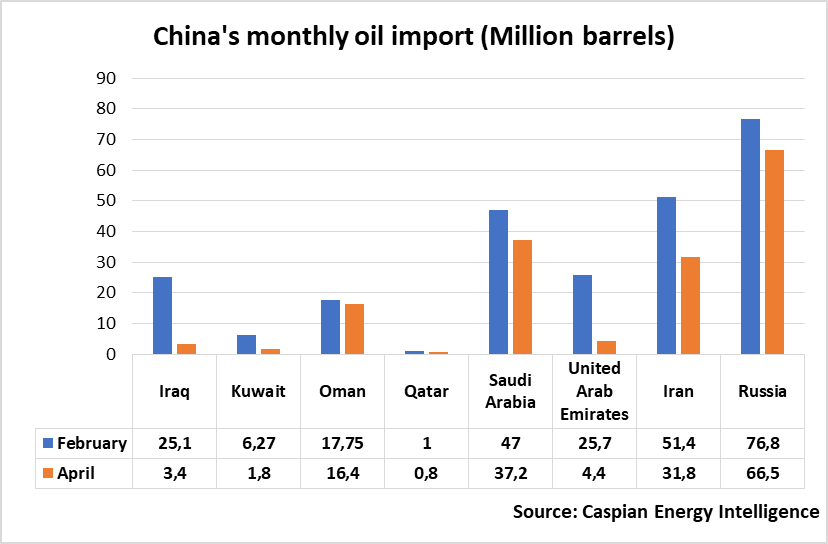
Data from Kpler further show that Iranian oil discharges at Chinese ports have fallen to approximately 1.065 million barrels per day this month, marking a 25% decline from April and a 38% drop compared to March.
These developments suggest that continued insecurity in the Strait of Hormuz is imposing heavy costs not only on global energy markets but also on China’s broader trade with the Gulf region, potentially becoming another source of pressure on Chinese economic growth in the months ahead.