
Israel’s recent strikes on Iran’s southern petrochemical infrastructure have raised concerns over potential disruptions to one of the country’s key sources of export revenue, underscoring the strategic vulnerability of its energy sector.
In recent days, Israel hastargeted at least eight large petrochemical facilities in Mahshahr, a major industrial zone in Khuzestan province, before extending its attacks to Asaluyeh — Iran’s largest petrochemical centre on the Persian Gulf coast in Bushehr province.
Mahshahr hosts around 20 major complexes with a nominal annual capacity of 26 million tonnes, accounting for roughly 28 per cent of Iran’s total petrochemical output. Actual production is estimated at about 21 million tonnes.
Asaluyeh, home to the country’s largest concentration of gas and petrochemical plants, represents an even bigger slice of the sector, producing around 48 per cent of Iran’s total output.
Officials in Tehran say auxiliary infrastructure — including electricity and water facilities — has suffered damage in Asaluyeh, though the production units themselves remain largely intact.
The petrochemical industry stands alongside oil as a cornerstone of Iran’s sanctioned economy, generating an estimated $13bn per year — about 22 per cent of all non-oil exports.
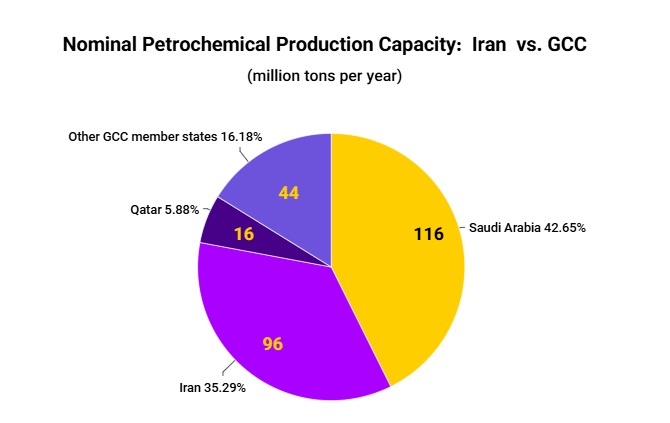
The country ranks second only to Saudi Arabia in regional petrochemical capacity. However, persistent feedstock constraints and difficulties obtaining spare parts due to Western sanctions have kept average utilisation at roughly 75 per cent.
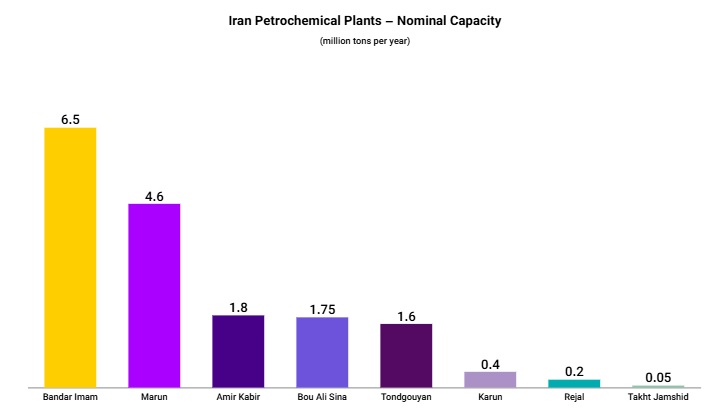
The full scale of damage to Mahshahr’s plants from the April 4 strikes remains unclear. The targeted sites — including Bandar Imam, Amir Kabir, Karoun, Marun, Razi, Takht-e Jamshid, Bu Ali Sina, and Tondguyan — have a combined nominal capacity of 17 million tonnes a year. Last Saturday, the power generation units serving the complexes, Fajr 1 and Fajr 2, were also hit, triggering a complete power outage across the zone.
Khuzestan produces about one-fifth of Iran’s electricity supply, and officials indicate that power disruptions may be temporary given the integrated nature of the provincial grid.
Still, any prolonged outage could ripple through Iran’s petrochemical export flows, tightening foreign exchange inflows at a time when Tehran relies heavily on them to offset the pressure of international sanctions and declining crude revenues.
The original article was published on Iran Open Data