
Strikes on two of Iran’s largest steel facilities threaten to erase at least $6 billion in annual export revenues and flip the country from a net exporter to a net importer of the metal for the first time in years.
Khuzestan Steel Company has halted operations following Friday’s attacks by the United States and Israel, with reports indicating damage to units at the Isfahan complex as well. The two plants together represent roughly half of Iran’s 32-million-tonne annual output — a production base that took two decades to build and survived years of Western sanctions.
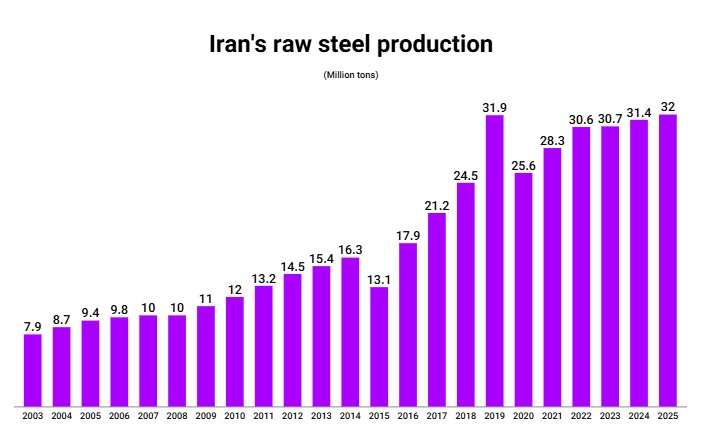
The economic exposure is substantial. Steel accounts for around 5% of Iran’s GDP and supports 1.2 million jobs across the supply chain. The sector is one of the Islamic Republic’s most reliable hard-currency earners, exporting more than 11 million tonnes annually while importing just 2 million — a net surplus of 9 million tonnes worth billions in foreign exchange.
If Isfahan and Khuzestan go offline permanently, that surplus turns into a 6-million-tonne annual deficit, according to World Steel Association data.
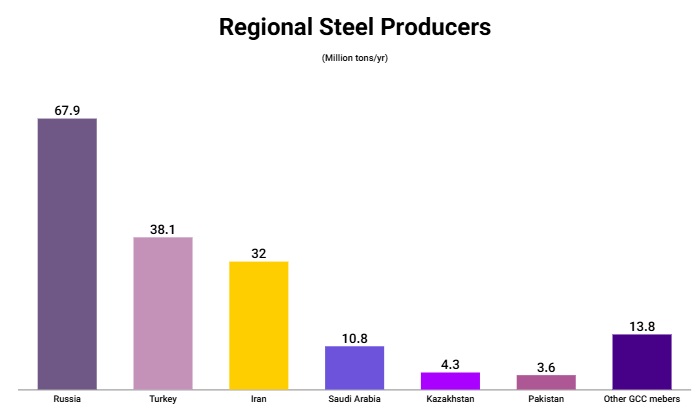
Iran built this industry despite sanctions. Output climbed from under 10 million tonnes in 2005 to 32 million tonnes last year, even as U.S. sanctions reimposed in 2018 capped capacity growth. The country ranks 10th globally — ahead of every regional neighbour except Russia and Turkey — with Mobarakeh Steel of Isfahan alone ranking 43rd among the world’s largest producers at 10.3 million tonnes a year.
The industry also feeds Iran’s defence sector, adding a strategic dimension to the economic damage.
Iran has since struck aluminium facilities in Bahrain and the UAE.
The original article was published on Iran Open Data Center.