
Turkey’s energy minister has emphasized the need to launch the second phase of the “Southern Gas Corridor” pipeline to double Azerbaijan’s gas exports to Europe.
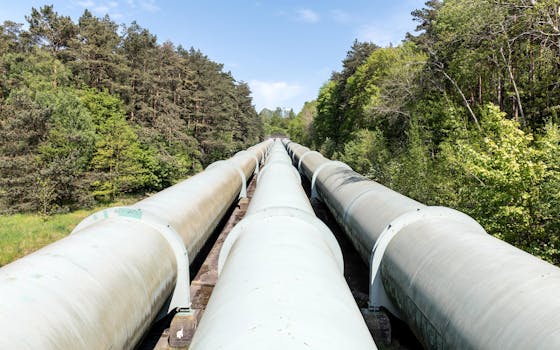
The pipeline, which became operational about seven years ago, currently transports 16 billion cubic meters (bcm) of Azerbaijani gas annually to Turkey and Europe. However, with only a few billion dollars in additional investment and the installation of more compressors, its capacity could be doubled.
Italy purchases more than 80% of Azerbaijan’s gas exports to Europe, and Prime Minister Giorgia Meloni is expected to visit Baku in the coming weeks for new gas negotiations.
Speaking at the Antalya Diplomacy Forum, Turkey’s Energy Minister Alparslan Bayraktar also stressed the importance of advancing the Trans-Caspian pipeline project, which would deliver Central Asian gas via a subsea pipeline across the Caspian Sea to Azerbaijan and onward to European markets.
Iran’s targeting of Qatar’s LNG facilities has driven up global gas prices and destroyed 17% of Qatar’s LNG export capacity.
Last year, the European Union imported 12 bcm of LNG from Qatar. The Southern Gas Corridor transported a similar volume of Azerbaijani gas to Europe. If its capacity is doubled, gas from Turkmenistan and Azerbaijan could effectively replace Qatari gas in European markets.
Bayraktar also highlighted the importance of fully utilizing the Baku–Tbilisi–Ceyhan (BTC) oil pipeline and increasing daily oil flows by 400,000 to 500,000 barrels from Central Asia and Azerbaijan to global markets.
Kazakhstan and Turkmenistan had agreements during Iran’s former President Mohammad Khatami’s era to export oil via Iran to global markets, but these were canceled under ex-President Mahmoud Ahmadinejad, with Azerbaijan replacing Iran as the transit route.
Following the Kremlin’s military invasion of Ukraine and disruptions to Russian routes, Kazakhstan and Turkmenistan have increased oil shipments through Azerbaijan to Turkey and global markets.
Meanwhile, Iran’s gas export contract with Turkey is nearing expiration. Bayraktar stated that no negotiations are currently underway to renew the deal, though discussions remain possible.
Under the 25-year contract, Iran is obligated to supply 9 bcm of gas annually to Turkey—a target it has failed to meet in recent years. The contract is set to expire in July.
According to official Turkish data, Iran delivered only 935 million cubic meters of gas in the first two months of 2026—half of its contractual commitment. In March, gas exports were further disrupted due to Israeli attacks on gas processing facilities in Asaluyeh.
Turkey also imported Turkmen gas via Iran last spring, but energy ministry data shows no such imports this year—a development some Turkish media attribute to U.S. sanctions on Iran.
Turkmenistan holds the world’s fourth-largest gas reserves after Russia, Iran, and Qatar. Last week, it signed an agreement with China’s CNPC to develop Phase 4 of the Galkynysh field—the world’s second-largest gas field. Turkmenistan exports around 45 bcm of gas annually, two-thirds of which goes to China.