Strait of Hormuz

Iran’s Oil Production and Exports Enter a Steep Decline

New shipping and energy market data indicate that Iran’s oil sector is facing its most severe disruption in years. Not only has the transit of Iranian crude through regional waters effectively come to a halt over the past six weeks, but China—the Islamic Republic’s sole major oil customer—also has steadily reduced its purchases of Iranian […]

Iran’s Oil Production and Exports Enter a Steep Decline Read More »
Iran’s Onshore Oil Storage Tops 70 Percent as Blockade Halts Exports

Iran has started reducing oil output as onshore storage tanks approach capacity following a month-long US naval blockade that has nearly halted exports, according to data from Kpler and Bloomberg. More than 70 percent of the country’s onshore tanks are now filled. An Iran Open Data analysis of Kpler shipping data, Bloomberg reporting, and OPEC

Iran’s Onshore Oil Storage Tops 70 Percent as Blockade Halts Exports Read More »

Iran’s Foreign Reserves Cover One Year of Imports as Oil Exports Collapse

Iran’s oil exports have collapsed since the US naval blockade began on April 13, with daily loadings falling from 2.1 million barrels to 567,000 barrels, according to tanker-tracking firm Kpler. Onshore storage and tankers in Iranian waters are filling up, and the government has begun cutting oil production. An Iran Open Data analysis of OPEC

Iran’s Foreign Reserves Cover One Year of Imports as Oil Exports Collapse Read More »

US blockade targets Iran oil boom amid regional disruption

The United States moved to impose a naval blockade on Iran just as the country’s oil exports were surging to their highest levels in years, underscoring Washington’s effort to halt a wartime boom in Tehran’s energy revenues. The move followed the collapse of negotiations in Pakistan and comes amid a war that has disrupted much

US blockade targets Iran oil boom amid regional disruption Read More »

Iran still depends on Hormuz despite years of workarounds

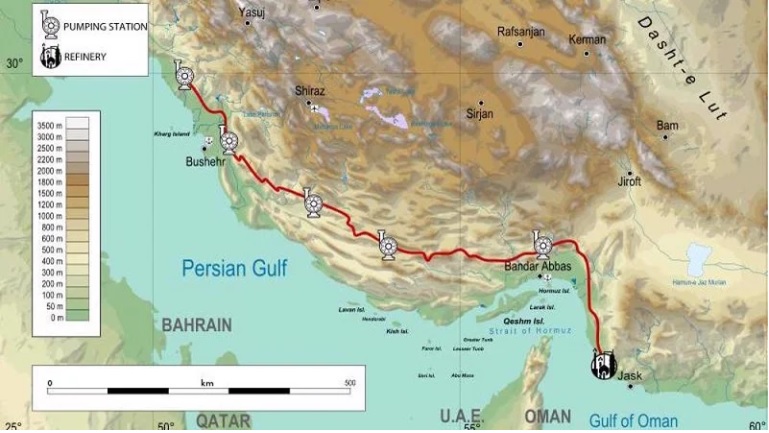
Iran’s plans to reduce its reliance on the Strait of Hormuz appear to have delivered little practical change so far, according to tanker-tracking data from Kpler obtained by Iran International. For more than a decade, Tehran has invested heavily in the Jask oil terminal, a project designed to shift part of its crude exports to

Iran still depends on Hormuz despite years of workarounds Read More »

tanker, ship, oil tanker, tanker, tanker, tanker, tanker, oil tanker, oil tanker, oil tanker, oil tanker, oil tanker

Iran Is Not Just Holding Oil Markets Hostage—It Is Mocking Them

Analysts often describe geopolitical crises as “holding hostage” global oil markets. But the latest developments in the Persian Gulf suggest something more striking: Iran is not merely disrupting the system; it is openly defying it. Iran has shut down traffic through the Strait of Hormuz and has targeted at least fifteen tankers and commercial vessels.

Iran Is Not Just Holding Oil Markets Hostage—It Is Mocking Them Read More »

Iran shields its oil exports as Hormuz flows falter

hile Iran has effectively choked off oil exports by its Arab neighbors through the Strait of Hormuz, it has continued shipping its own crude largely uninterrupted. Since the start of joint US–Israeli strikes on February 28, Iran has targeted at least 16 vessels and tankers, sharply curbing flows through one of the world’s most critical

Iran shields its oil exports as Hormuz flows falter Read More »

pexels-photo-35416117-35416117.jpg

Hormuz disruption tests limits of global energy markets

Failure to restore shipping through the Strait of Hormuz is beginning to show what prolonged disruption could mean for global energy markets. Early volatility has been sharp but manageable, yet the longer the disruption lasts, the greater the risk that physical shortages—rather than price swings—will drive the crisis. In recent days, Iranian attacks have expanded

Hormuz disruption tests limits of global energy markets Read More »

Iran’s oil weapon may rattle markets but not alter the war

Iran has shown it can disrupt regional energy flows. What remains far less clear is whether it can use that leverage to shape the outcome of the conflict in its favor. Over the past several days, Iranian missiles have targeted three oil tankers and several oil and gas facilities in neighboring countries while also obstructing

Iran’s oil weapon may rattle markets but not alter the war Read More »

Attacking Gulf Arab States Was a Huge Mistake for Iran

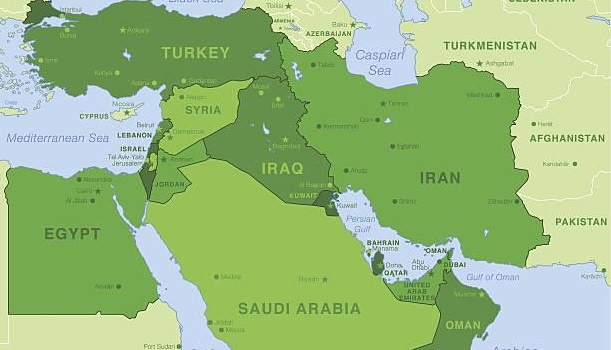
After suffering U.S. and Israeli strikes on its military and senior officials, the Islamic Republic launched a missile and drone assault against Arab states along the Persian Gulf. Iranian forces launched roughly 1,500 drones and missiles at Iraq, Saudi Arabia, Kuwait, Bahrain, the United Arab Emirates, Qatar, and even Oman as of March 3, 2026.

Attacking Gulf Arab States Was a Huge Mistake for Iran Read More »