
President Donald Trump has in recent days threatened to obliterate Iran’s power plants, in response to the Islamic Republic’s effective closure of the Strait of Hormuz. He has since delayed any action, saying he granted a grace period—despite Tehran’s insistence that it is not negotiating with the White House over a 15-point proposal reportedly conveyed via Pakistani intermediaries.
Whatever the truth of the diplomacy, the threat is revealing. By singling out the Damavand power plant—a 2.9 GW facility supplying roughly 43% of Tehran’s electricity—the American president is targeting the most literal form of power in Iran.
Yet a strike on such a site, however dramatic, would test not just capacity but resilience: whether the grid can absorb the shock or tip into systemic failure.
Iran’s electricity system appears sprawling, with roughly 600 power plants. In practice, it is tightly concentrated. Just 12 facilities, each exceeding 1,300 MW, account for about a fifth of actual generation—a concise list of high-value targets.
The system’s main defence is its interconnectedness: if Neka, on the Caspian coast, were disabled, generation from the south could, in principle, be rerouted north. But that assumes the grid’s “central nervous system”—dispatch centres and high-voltage transmission lines—remains intact. In modern warfare, networks fail as often as nodes.
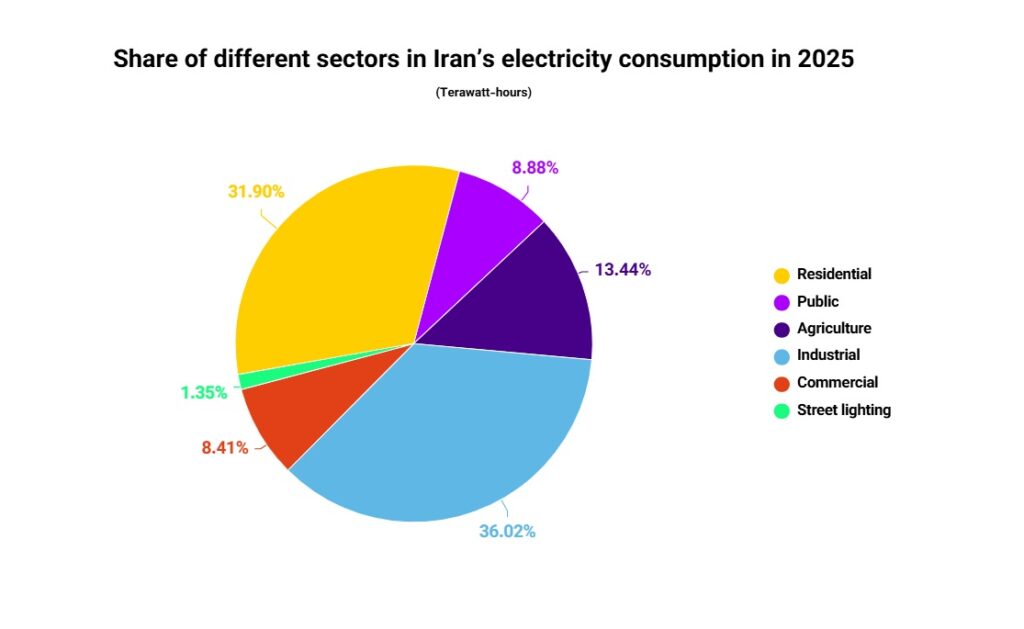
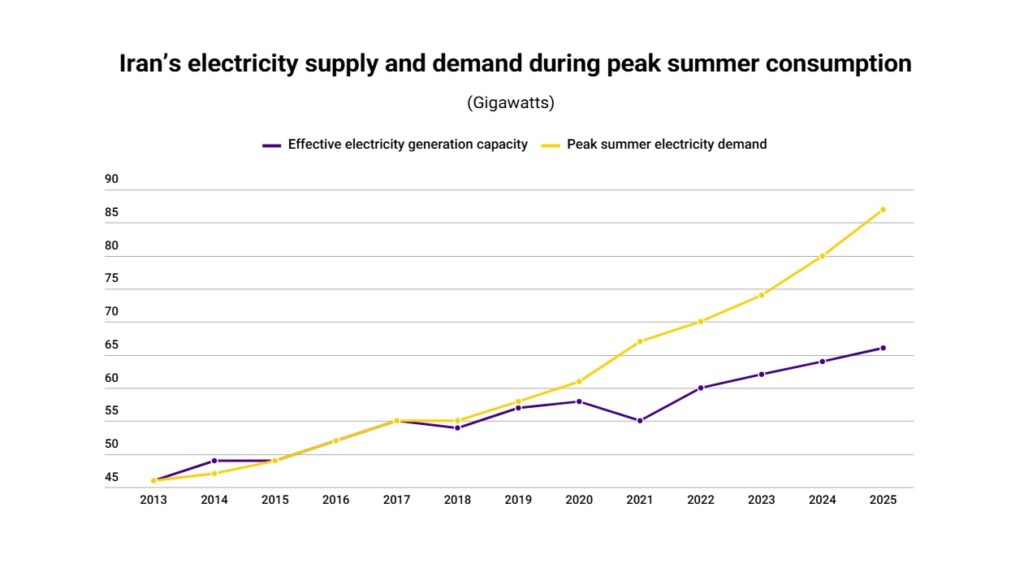
The country already operates under managed scarcity. During summer peaks, when demand exceeds supply by 20–25%, the state enforces a strict hierarchy of outages. Heavy industry and petrochemicals are curtailed first, followed by agriculture and public institutions. Households endure rolling cuts of two to four hours a day. Hospitals are nominally protected, yet even they have experienced outages. The system does not collapse suddenly; it degrades in stages.
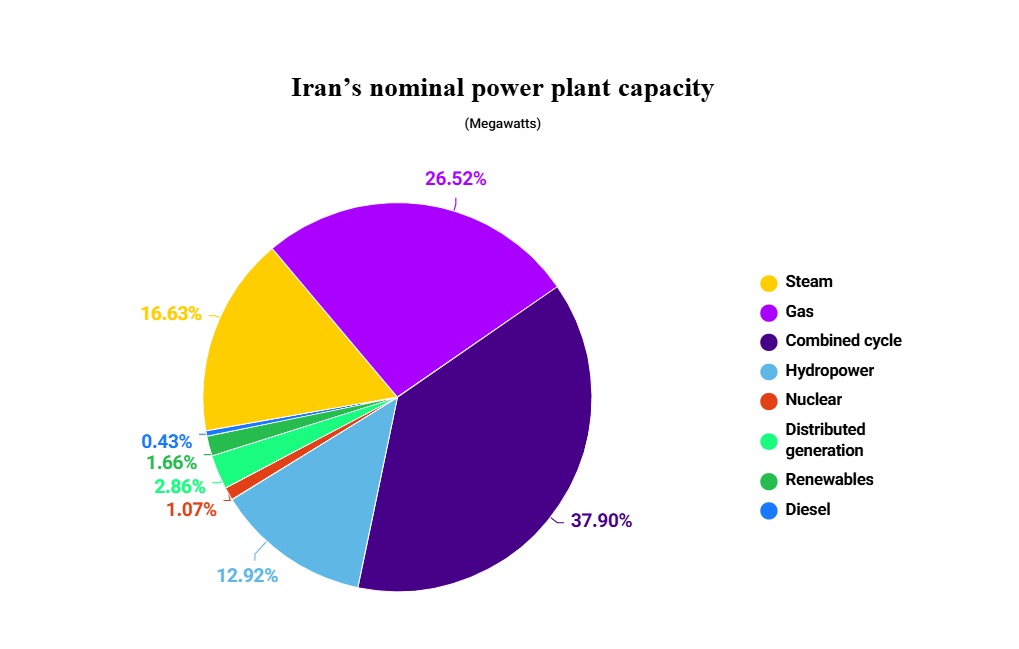
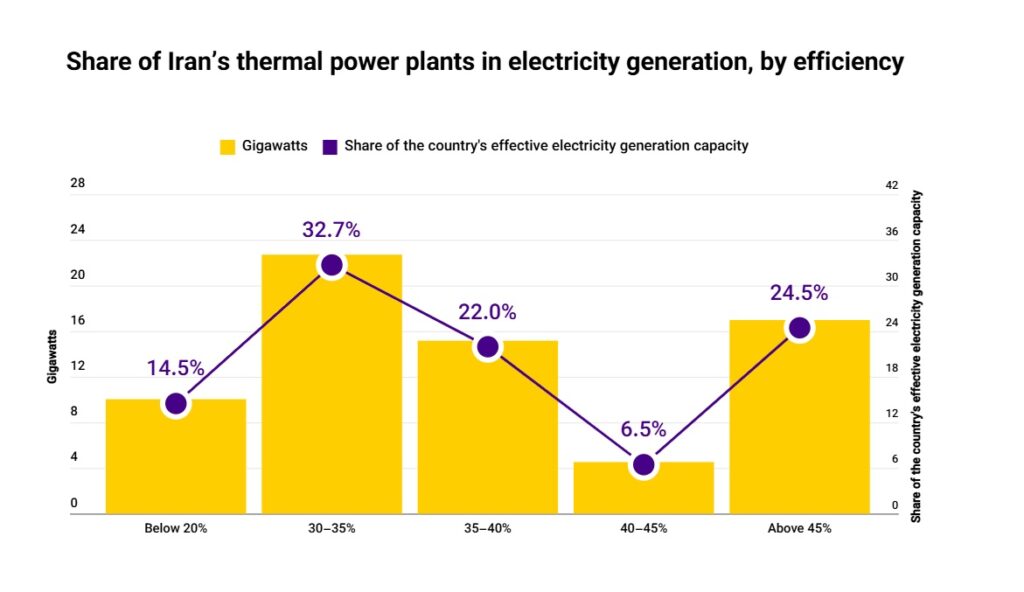
Its energy mix offers little cushion. Despite decades of rhetoric, nuclear and renewable sources each contribute only about 1% of actual generation. Thermal plants—mostly ageing gas and steam units—dominate, accounting for more than 80% of capacity. Even the headline figure of 95,000 MW is misleading: effective operational capacity is closer to 72,000 MW, further eroded by transmission losses of roughly 13%. The grid enters any crisis already constrained.
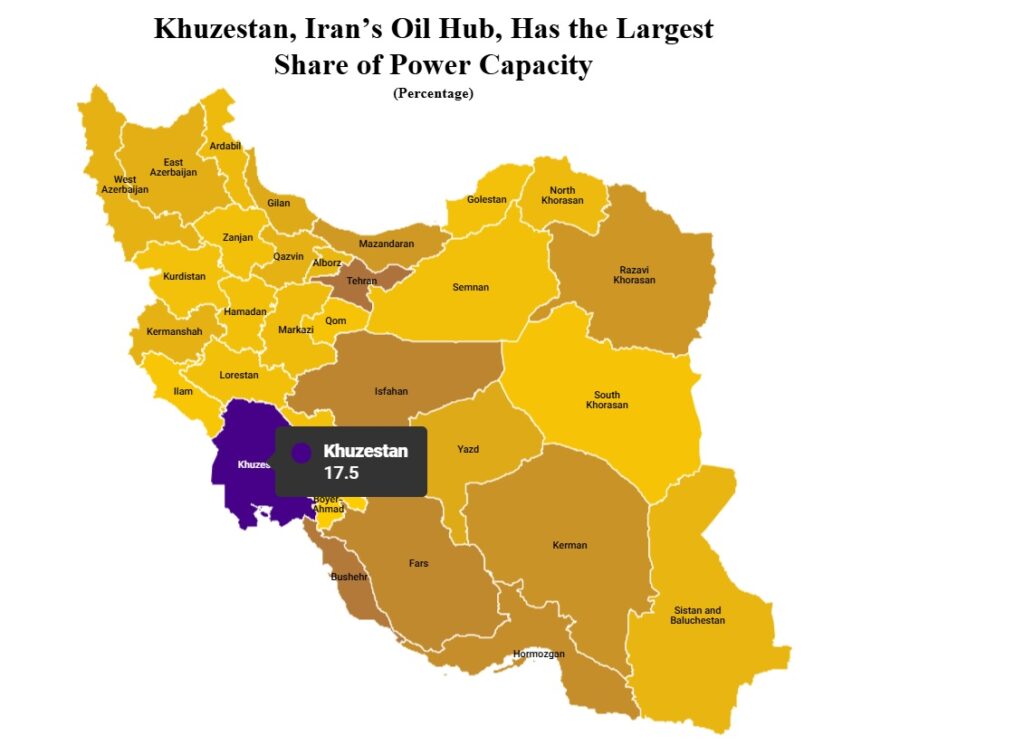
Geography sharpens the risk. Khuzestan, the oil and gas heartland, holds the largest share of generation capacity. This alignment of fuel and power is efficient in peacetime, but exposed in conflict. A concentrated strike on major plants would not immediately black out the country. More likely, it would intensify rationing—shifting the burden from industry to households, and eventually to entire regions.
Iran’s grid is neither robust nor brittle. It can bend under pressure, but only while control holds. Disable generation, and the system strains. Disable transmission and dispatch, and the lights may not go out all at once—but they may not come back on.
The original article was published on Iran Open Data