
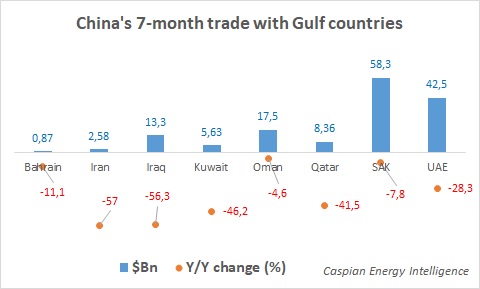
New Chinese customs data show that Iran has experienced the steepest decline in trade with China among countries in the region during the first seven months of 2026.
Bilateral trade between Iran and China fell 57% year-on-year to just $2.58 billion during the January–July period.
Iraq recorded a similarly sharp decline, while Oman suffered the least disruption from the closure of the Strait of Hormuz by the Islamic Republic, largely because it is less dependent on the strait for its trade flows.
The details of China’s customs data are particularly revealing. Although China’s imports from Oman fell 18%, Chinese exports to Oman surged 68% during the first seven months of the year. This suggests that Oman has increasingly served as an alternative route for some Chinese exports to Arab countries in the region.
Trade between Iran and Oman, as well as Gulf countries—with the exception of Iraq—has effectively come to a halt since the Islamic Republic blocked the Strait of Hormuz in early March.
China’s customs data report zero Iranian oil imports because Iranian crude is frequently rebranded and shipped under the names of other countries, particularly Malaysia. However, Kpler data show that China purchased an average of 1.25 million barrels per day of Iranian oil during the first seven months of 2026, down 12% from the same period last year.
Kpler data also show a much sharper decline in recent months. From the beginning of July through this week, China’s average daily purchases of Iranian crude fell to around 500,000 barrels per day.
China’s customs data further indicate that its oil imports from other Gulf countries, including Oman, averaged approximately 2.97 million barrels per day during the first seven months of 2026, a 38% decline from the same period last year.
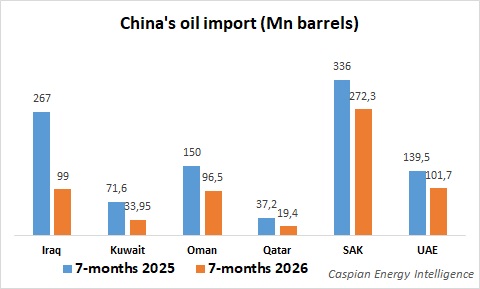
However, the trend has reversed in recent months. While China’s purchases of Iranian oil have continued to fall, its crude purchases from other Gulf producers have increased over the past two months.
The data point to a broader shift in regional trade and energy flows: Iran is losing its position in China-linked trade as businesses and energy buyers increasingly redirect commercial and oil flows toward alternative routes and suppliers around the Gulf.