
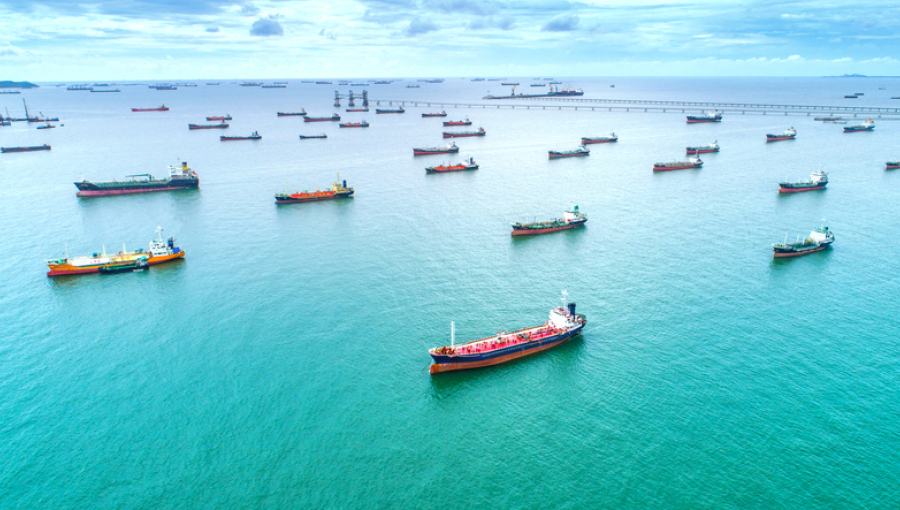
Iran’s floating oil storage in Asian waters—the last supply available for delivery to buyers, predominantly in China—has run dry amid the ongoing U.S. naval blockade, according to tanker-tracking data.
Energy intelligence firm Kpler reports that Iranian oil transit halted in mid-July and loadings stopped completely by mid-August. Once the roughly 15 million barrels stored off the Chinese coast were offloaded in recent weeks, no floating reserves remained.
The halt will not cut off foreign currency inflows immediately. Chinese buyers typically pay two to three months after delivery, so Iran could still collect part of its outstanding receivables by the end of the current calendar year.
However, the slide began well before the shutdown. Exports to China have roughly halved over the past three months. The stakes are high: OPEC 2025 data shows Iran exported 2.08 million barrels per day of crude oil and petroleum products last year, earning over $45 billion. That revenue stream is now close to a total halt.
Oil still anchors the economy, which the Statistical Center of Iran valued at roughly $356 billion last year. The same source shows the oil and gas extraction sector’s share of GDP fell from 26% to around 21% within a single year, while the economy contracted by 10% this spring.
Production is falling as well. OPEC data shows that since military conflict escalated in February 2026, Iran’s daily crude output has fallen from roughly 3.4 million barrels to around 2 million—a decline that will likely deepen the recession in the coming months.
Oil also pays for imports. In the previous Iranian calendar year, more than $57 billion of Iran’s $113 billion in total exports—over half of all earnings—came from oil and gas. On paper, the country ran a trade surplus, but capital flight of roughly $20 billion wiped out that cushion.
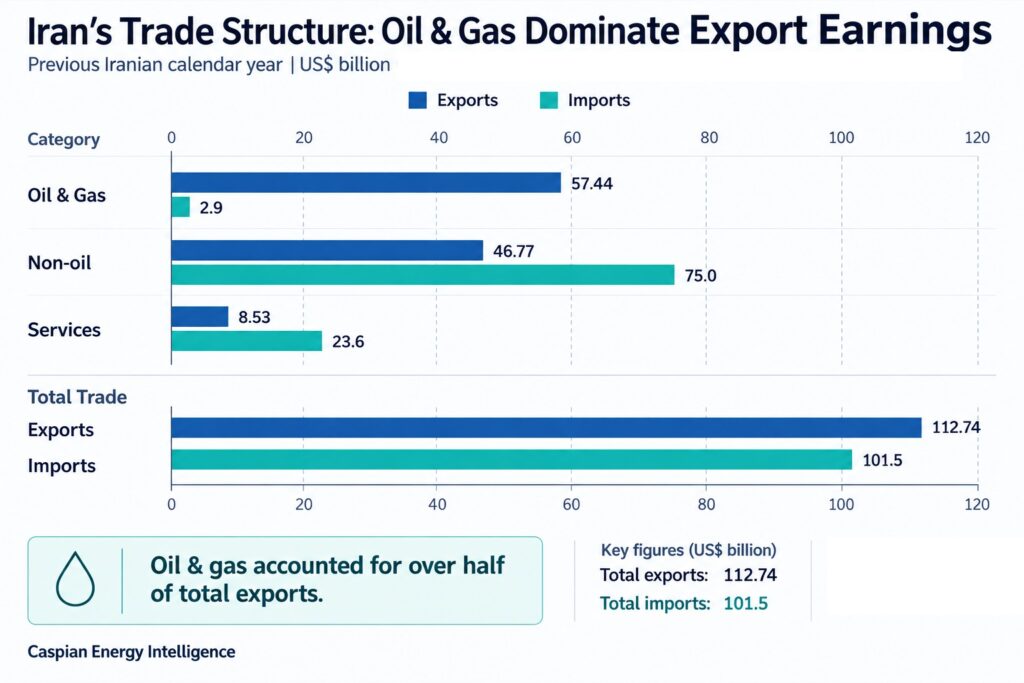
Non-oil exports offer little relief. About $17 billion of them depended on the petrochemical and steel industries, both damaged in the war. Taken together, the loss of petrodollars, shrinking petrochemical sales, and continued capital flight are draining the foreign exchange the government can actually access.
The most tangible result is an unprecedented surge in living costs. Iran spends roughly $17 billion a year on basic food and grain imports, which require a steady supply of foreign currency. Any disruption means shortages and price spikes for staple goods.
The damage is already visible in the markets. Over the past six months, the U.S. dollar has surged roughly 70% against the rial, point-to-point inflation reached nearly 90% in September, and the central bank governor reported that liquidity expanded by 51% over the past year.
Add the collapse of oil revenue to these three forces, and the crisis threatens to deepen in the months ahead with a weaker rial, costlier imports, and faster inflation.
The original article was published on Iran Open Data website.