
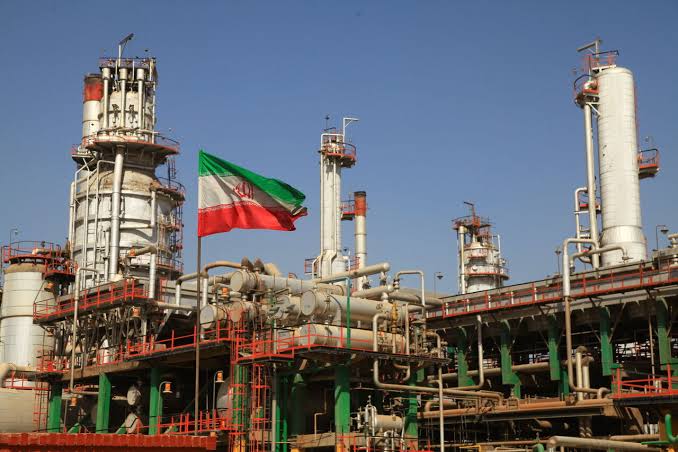
Iranian officials are warning of a daily deficit of around 14 million liters of gasoline—a crisis visibly marked by kilometer-long queues outside filling stations across the country. While the government primarily attributes this shortage to growing car ownership and high domestic fuel consumption, our analysis of vehicle and energy data at Iran Open Data shows that rising demand tells only part of the story.
A significant portion of the imbalance stems from structural supply-side issues: declining gasoline quality, a sharp drop in compressed natural gas (CNG) supplies, and stalled refining capacity. Iran’s last major facility, the Persian Gulf Star Refinery, came online in 2018. Subsequent COVID-19 mobility restrictions briefly lowered domestic consumption—allowing Iran to temporarily export gasoline—but over the past five years, that surplus has completely vanished into a widening deficit.
Five Million More Cars
Official data show that between 2021 and last year, Iranian automakers produced over 5.32 million gasoline-powered passenger vehicles. Over the same period, roughly 140,000 foreign cars were imported, most of which were also gasoline-powered. Conversely, officials report that only about 680,000 old, high-emission vehicles were scrapped during these five years. This created a net addition of nearly five million gasoline-dependent cars on Iran’s roads.
The problem is compounded by low fuel efficiency. According to parliament’s Industries and Mines Commission, domestic cars consume an average of 8 to 10 liters of gasoline per 100 kilometers, which is roughly one-third more than comparable foreign vehicles. Fleet expansion has thus driven up demand in two ways: adding millions of new vehicles while maintaining a highly inefficient fleet.
Lower-Quality Fuel
Surging consumption is only one driver of the crisis. A confidential document from the National Iranian Oil Refining and Distribution Company, reviewed by Iran Open Data, reveals that starting in 2024, the government halted the daily production of over 3.7 million liters of premium gasoline to cut costs. Production of Euro 4 and Euro 5 standard fuels was also scaled back.
Instead, refineries increased output of low-quality, 87-octane gasoline, which now accounts for roughly 80 percent of Iran’s total supply. Lower octane ratings cause inefficient engine combustion, directly increasing fuel consumption per kilometer. To cover the physical shortfall, the Persian Gulf Star Refinery recently introduced methanol as a blending additive, causing additive use to increase more than fourfold. While methanol is cheap and abundant—accounting for 44 percent of Iran’s basic petrochemical output—its use in motor fuel is strictly limited under global automotive standards due to potential engine damage, health risks, and environmental hazards.
CNG Supply Collapse
Iran’s broader natural-gas crisis is directly feeding the gasoline shortage. Data reviewed by our team show that daily CNG supply dropped from 24.7 million cubic meters in 2021 to around 15.8 million cubic meters last year, representing a decrease of nearly 9 million cubic meters per day.
For Iran’s large fleet of dual-fuel vehicles, this CNG shortfall forced drivers back to gasoline. Estimates suggest this displacement alone has added roughly 9 million liters per day to national gasoline demand, effectively transmitting the natural gas crisis straight into the transport sector.
Surging Import Costs
Shrinking domestic production and rising demand have severely strained national finances. Central Bank data reveal that Iran’s imports of gas and petroleum products surged from $197 million in 2021 to over $2.9 billion last year—a nearly 15-fold increase in foreign currency expenditures.
Supply chain pressures have worsened amid recent military conflicts and trade disruptions. Damage to the Lavan Refinery removed roughly 3.5 million liters of daily gasoline production capacity. Furthermore, Iran previously bartered exported fuel oil for imported gasoline; however, recent maritime blockades and sanctions have disrupted these exchanges. According to Kpler energy data provided to Iran Open Data, average daily fuel-oil exports dropped to 88,000 barrels per day between late February and late August, down 60 percent from pre-war levels.
Ultimately, Iran’s 14 million-liter daily gasoline deficit is not simply the result of too many drivers on the road. It is the culmination of converging structural failures, where unchecked fleet growth, degraded fuel quality, natural gas shortages, and trade bottlenecks have all collided at once.
The original article was published on Iran Open Data